
We Reviewed 1,000 Sales Calls. Here’s Where Deals Actually Die

I recently went through the last 1,000 logged sales calls from our clients hoping I could spot some low-hanging fruit that could help everyone.
One interesting pattern jumped out pretty quickly. Every freelancer rates their call from 1 to 5 right after it ends:
1 = drained
5 = fired up
There were 203 wins in the data, and 185 of them came from calls rated a 4 or 5.
That’s 91%.
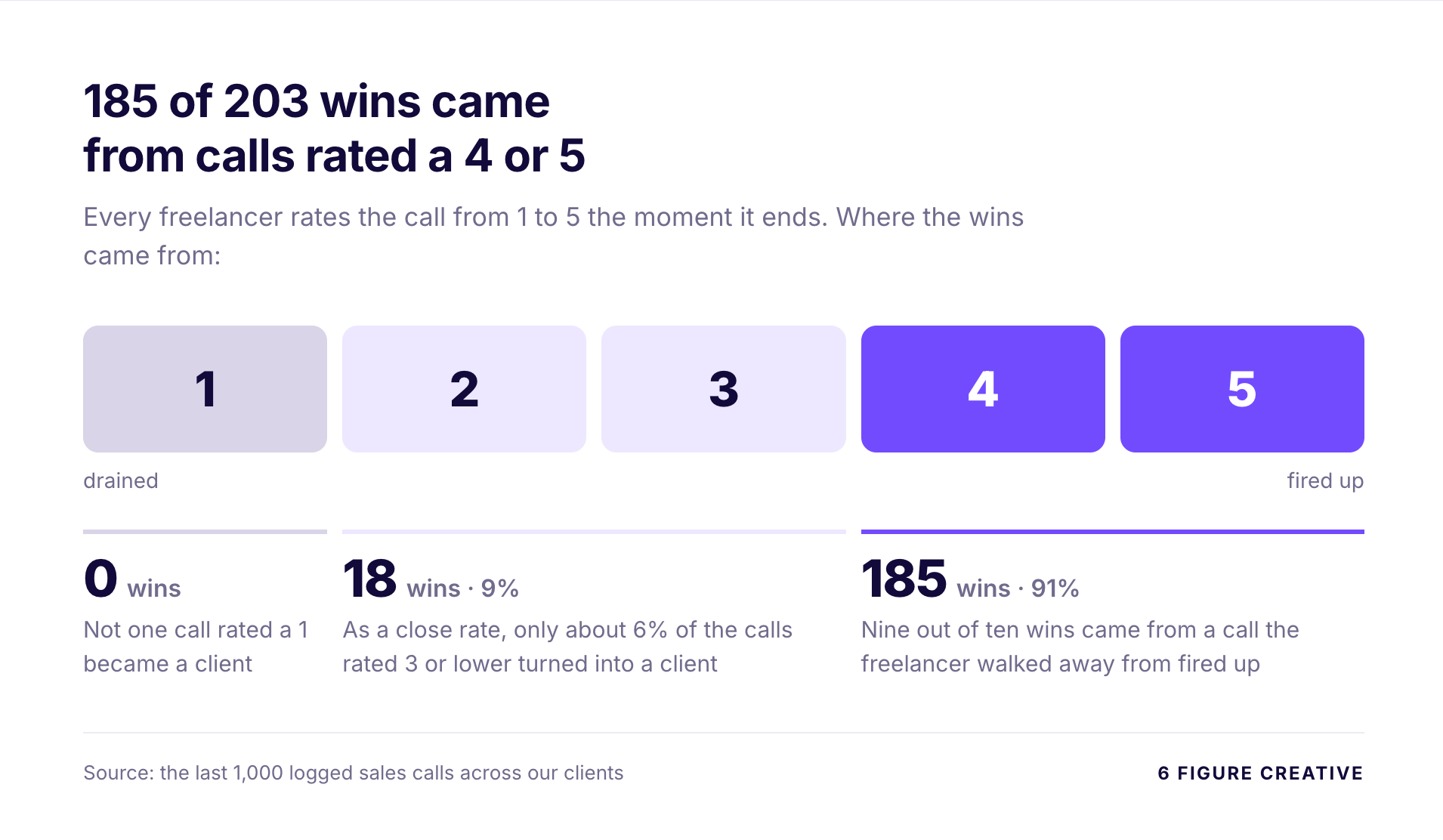
Calls rated 3 or lower turned into clients about 6% of the time, and not a single 1 became a client.
The rating obviously isn’t causing the sale. It’s just a pretty good read on whether the prospect was actually leaning in, asking buying questions, talking dates, discussing logistics, and generally acting like someone who wanted to move forward.
The part I found more interesting was what happened next.
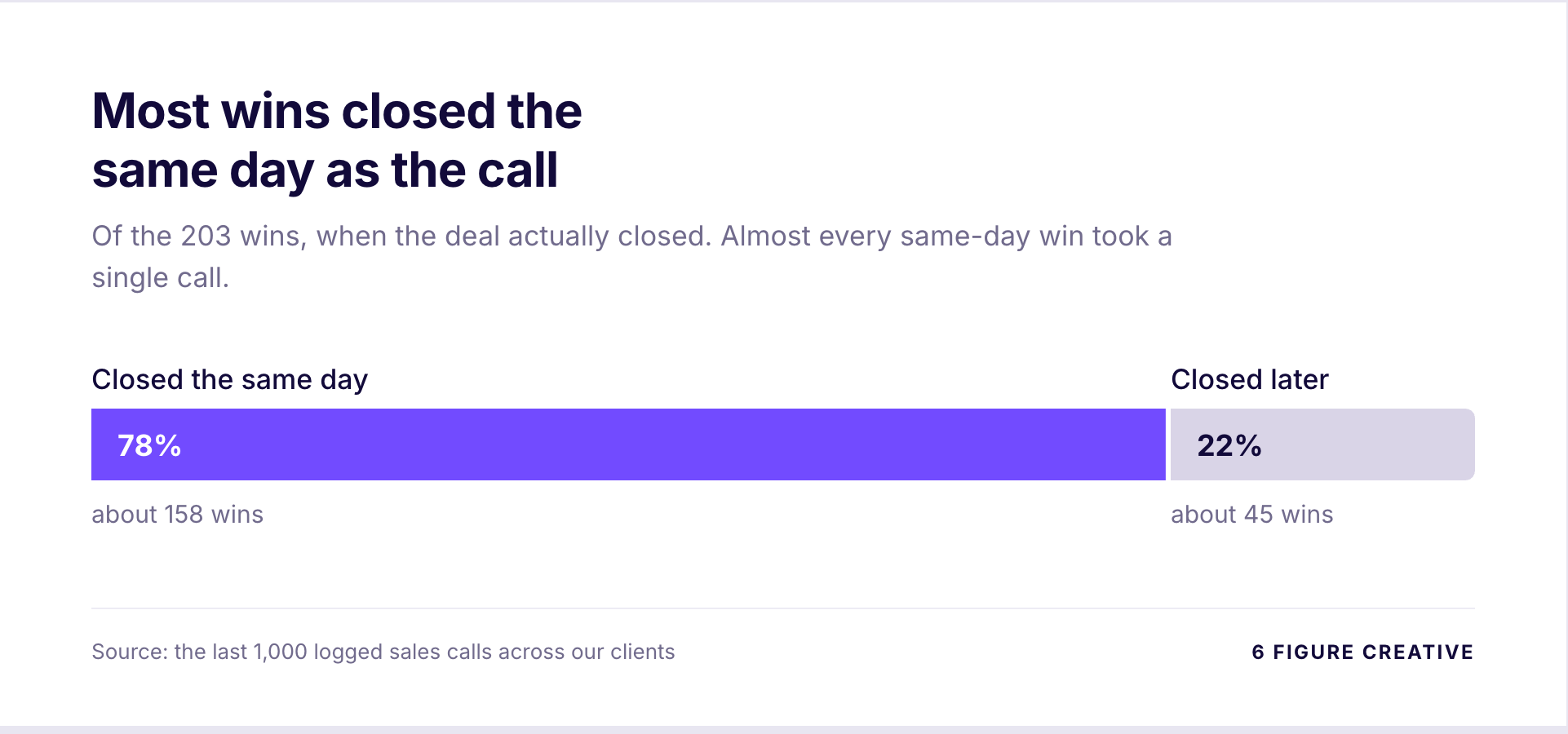
78% of the wins closed the same day, and almost every one of them took a single call.
That made me think about how much energy freelancers put into follow-up sequences when the biggest opportunity might be sitting right there at the end of the sales call.
The dangerous part is the gap between “yes” and getting paid
We’ve now seen this exact thing happen across several different creative businesses.
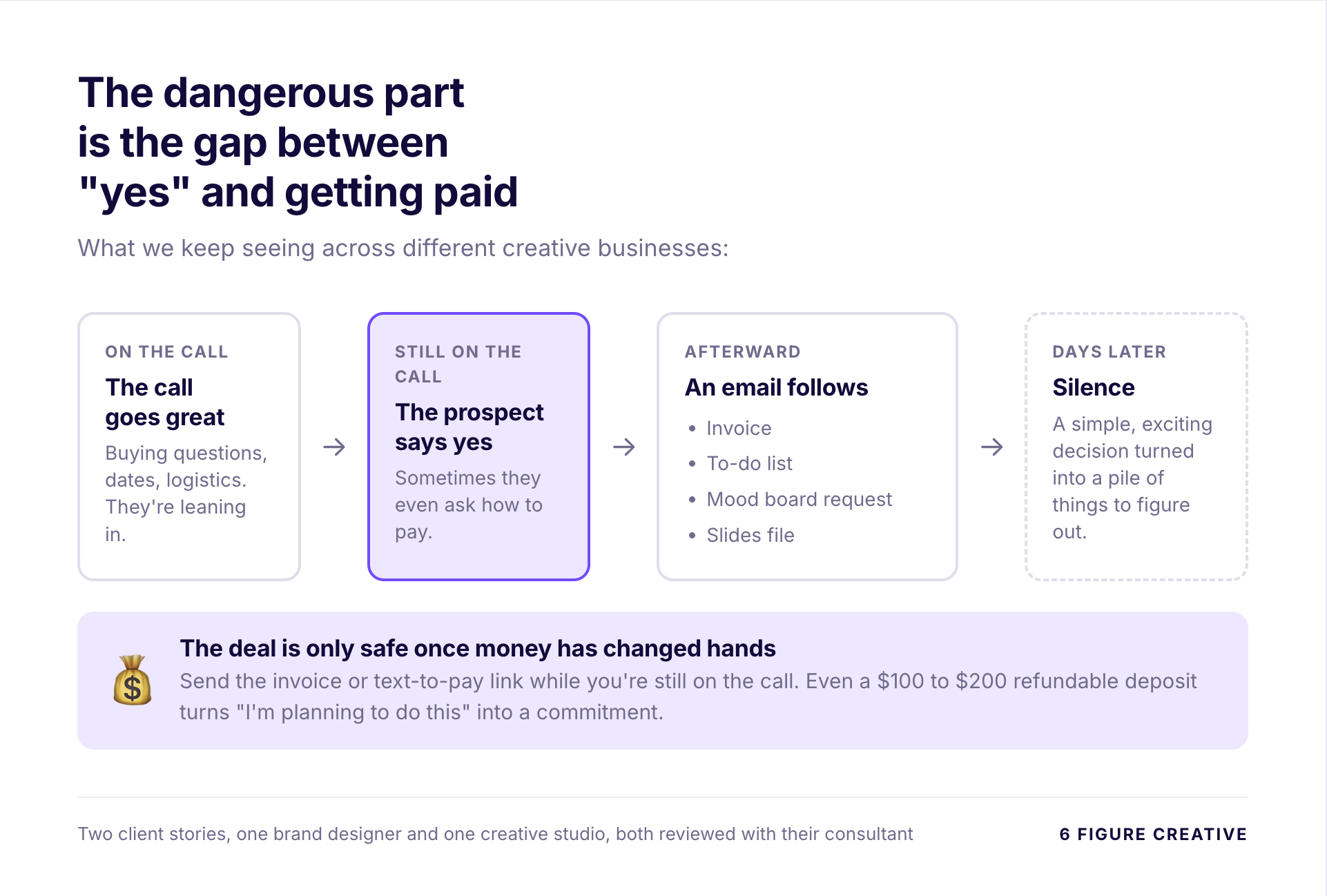
The call goes great.
The prospect says yes.
The freelancer hangs up excited.
Then the invoice, proposal, onboarding steps, or payment instructions get sent afterward... and suddenly the person disappears. (your prospect → 👻)
One of our brand design clients had two prospects say yes on the call.
One of them even asked for the bank details to pay the onboarding fee.
Both went quiet afterward.
The client eventually told their consultant:
I feel like if I had been able to collect the onboarding fee on that sales call with one of those clients, I would have actually closed the deal.
Another client had a prospect say yes to a four-figure design project, show up to a second call ready to go, brainstorm ideas with them, and then ask:
How do you want me to pay?
The answer was basically that an email would follow.
That email came with the invoice, a to-do list, a mood board email, and a slides file.
The prospect had already said he wasn’t very technical and didn’t even know what a mood board was.
What had felt simple and exciting on the call suddenly became a bunch of shit he needed to figure out.
The consultant reviewed the calls afterward and didn’t think price was the problem. The prospect had called the price great twice.
The bloated process stalled him.
That’s the part I think is worth paying attention to.
A “yes” is great... but it still isn’t a closed deal
A verbal yes feels like the finish line.
It really isn’t.
The deal is much safer once some money has actually changed hands.
That could mean sending the invoice (or text-to-pay link if you're using our CRM) while you’re still on the call and letting them take care of it right then.
The project might not start for another two months, and that’s fine. The deposit can hold the spot while the start date moves with their timeline.
The person might genuinely need more time, and that’s fine too. A small refundable deposit of $100 or $200 can sometimes be enough to turn “I’m planning to do this” into an actual commitment.
The goal isn’t to trap somebody into paying you.
The goal is to make it easy for someone who already decided to move forward to actually finish making the decision.
If taking payment on the call feels pushy
I know this is where some people are going to get uncomfortable.
One of our music production clients told us:
If you think it would make a huge difference to get them to pay on the call I'll consider it, but I've always found it too pushy and icky.
I completely understand that feeling.
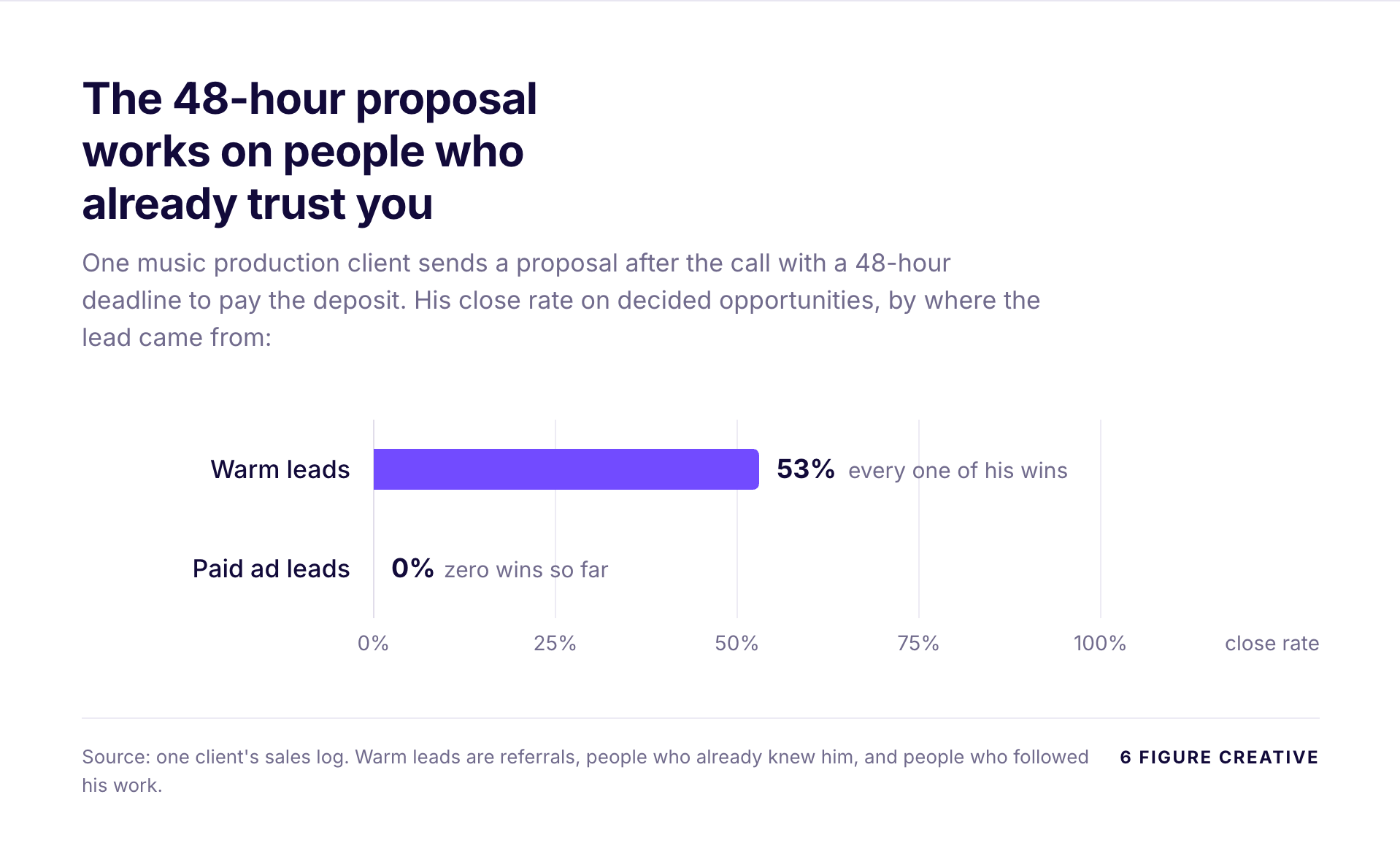
He prefers sending a proposal after the call with a 48-hour deadline to pay the deposit, and historically he’s closed about 53% of his decided opportunities that way.
There’s an important detail hiding inside that number, though.
Every one of those wins came from warm leads.
Referrals, people who already knew him, people who had followed his work... that sort of thing.
His paid ad leads?
Zero wins so far.
That makes sense to me.
A warm referral already comes into the conversation with trust. Somebody they know probably vouched for you, they may already be familiar with your work, and they’re usually more willing to leave the call, think about it, open your email later, and still follow through.
A complete stranger gives you a lot less room for error.
There’s an idea in sales called the law of diminishing intent. The basic idea is simple:
The longer someone waits to make a decision, the less likely they are to ever make it.
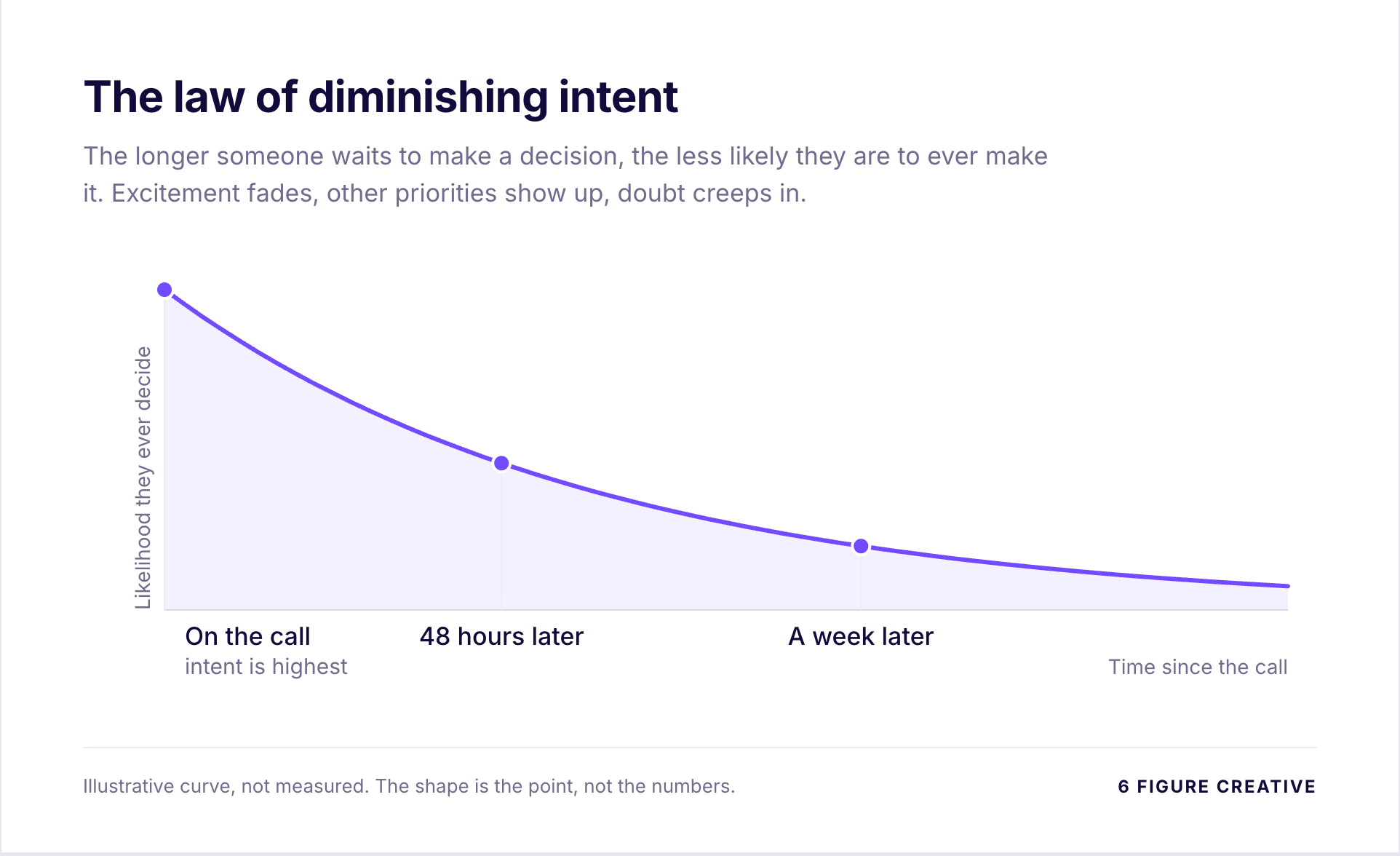
Excitement fades. Other priorities show up. Doubt creeps in. They talk themselves out of it. Sometimes they just get busy and forget.
That’s why I think you have to be honest with yourself here.
You absolutely can decide that asking for payment on the call feels too pushy for you.
Nobody is forcing you to sell that way.
You also have to accept that you’re probably going to close fewer clients because of it... especially once you start selling to complete strangers instead of referrals and people who already trust you.
A 48-hour deadline might be a perfectly good middle ground while you get more comfortable.
I just wouldn’t confuse “this works pretty well with my warm leads” with “this will work equally well when I start buying cold traffic.”
Cold leads usually need the decision to become real while the intent is still high.
That might mean the full deposit.
That might mean $100 or $200 to hold the spot.
Either way, the goal is the same... don’t make someone who just told you yes go home and make the entire decision all over again.
A good call that doesn’t close still needs another conversation
The 4-rated calls were also interesting.
Warm leads like referrals, past clients, and organic leads rated 4 still closed about 80% of the time. Ad leads rated 4 still closed around 38%.
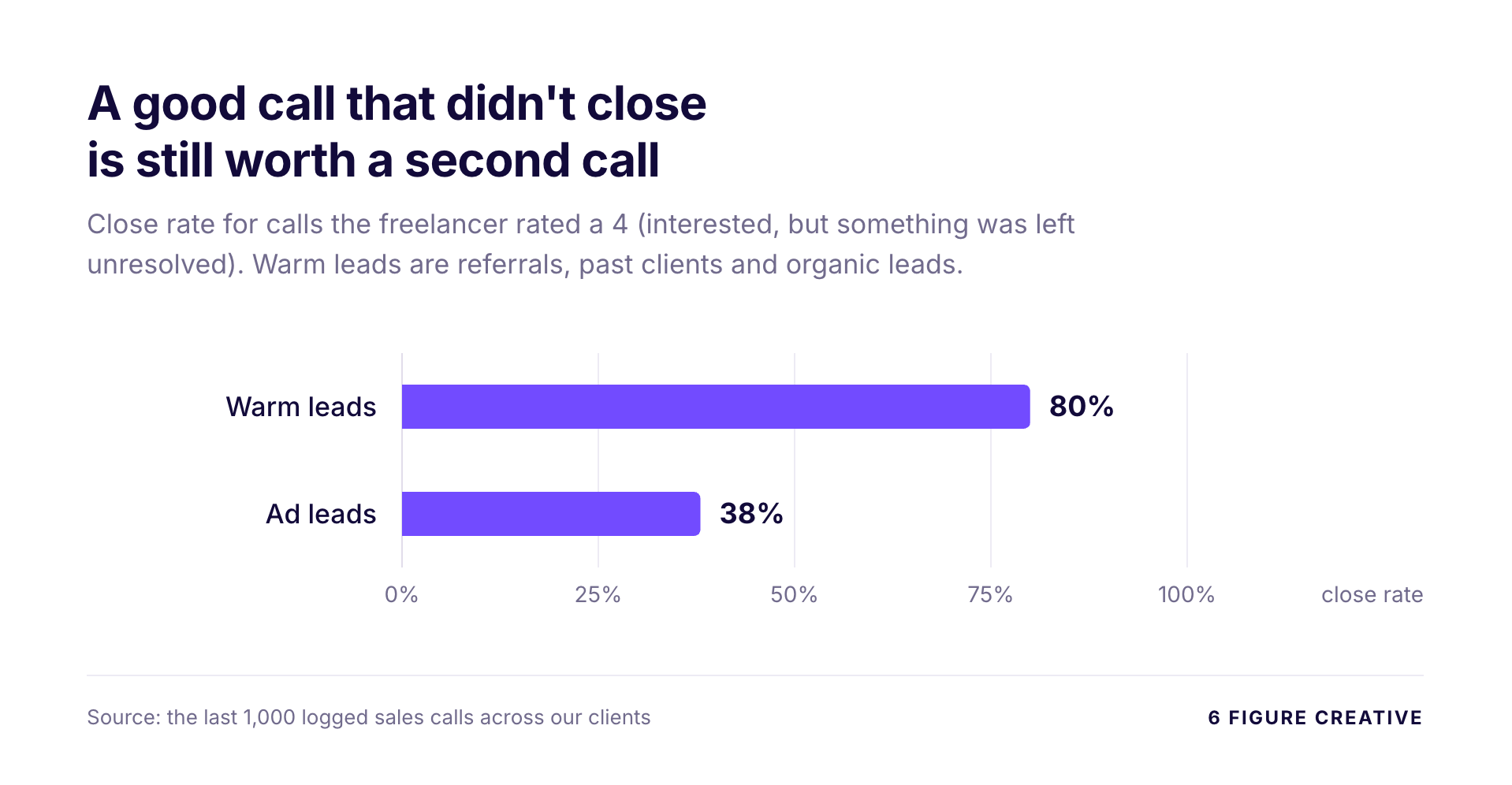
Those aren’t bad calls...something just wasn’t completely resolved yet. This is why we BAMFAM (Book A Meeting From A Meeting)
A proposal or follow-up email might help, but I’d rather see another short call on the calendar (even if it’s just 15-20 minutes).
You figure out what they still need to think through, schedule the second conversation while you’re both there, and give the deal somewhere to go.
That’s a lot different from sending three “just checking in” emails over the next month.
Something you can test on your own calls
Try rating your next 20 sales calls from 1 to 5 immediately after they end (you DO have a sales log, right?).
Keep it simple.
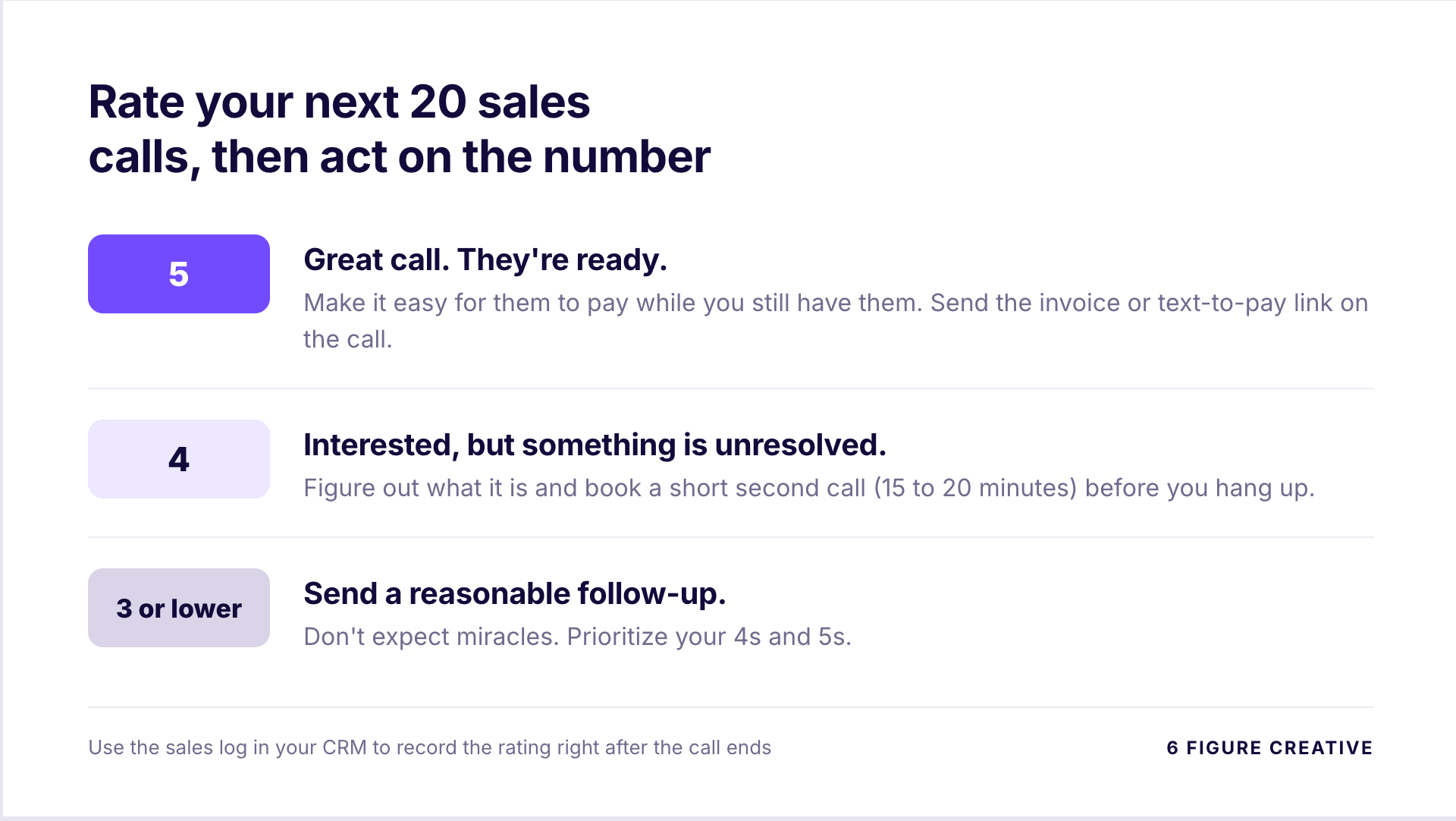
5: Great call. They're ready, so make it easy for them to pay while you still have them.
4: They’re interested, but something is unresolved. Figure out what it is and book a short second call.
3 or lower: Send a reasonable follow-up, but don’t expect miracles (prioritize your 4s and 5s)
Then look at what actually happened. You’ll probably start seeing your own pattern pretty quickly.
The bigger lesson for me is that a verbal yes deserves more attention than we usually give it.
Someone just told you they want to work with you.
Help them finish the decision while the decision is still fresh.
Free strategy call
Think you could benefit from a custom marketing strategy?
Tell us about your business, and we'll see if we can help.